
Tabletop Hypersonic Shock Tunnel Enhancement
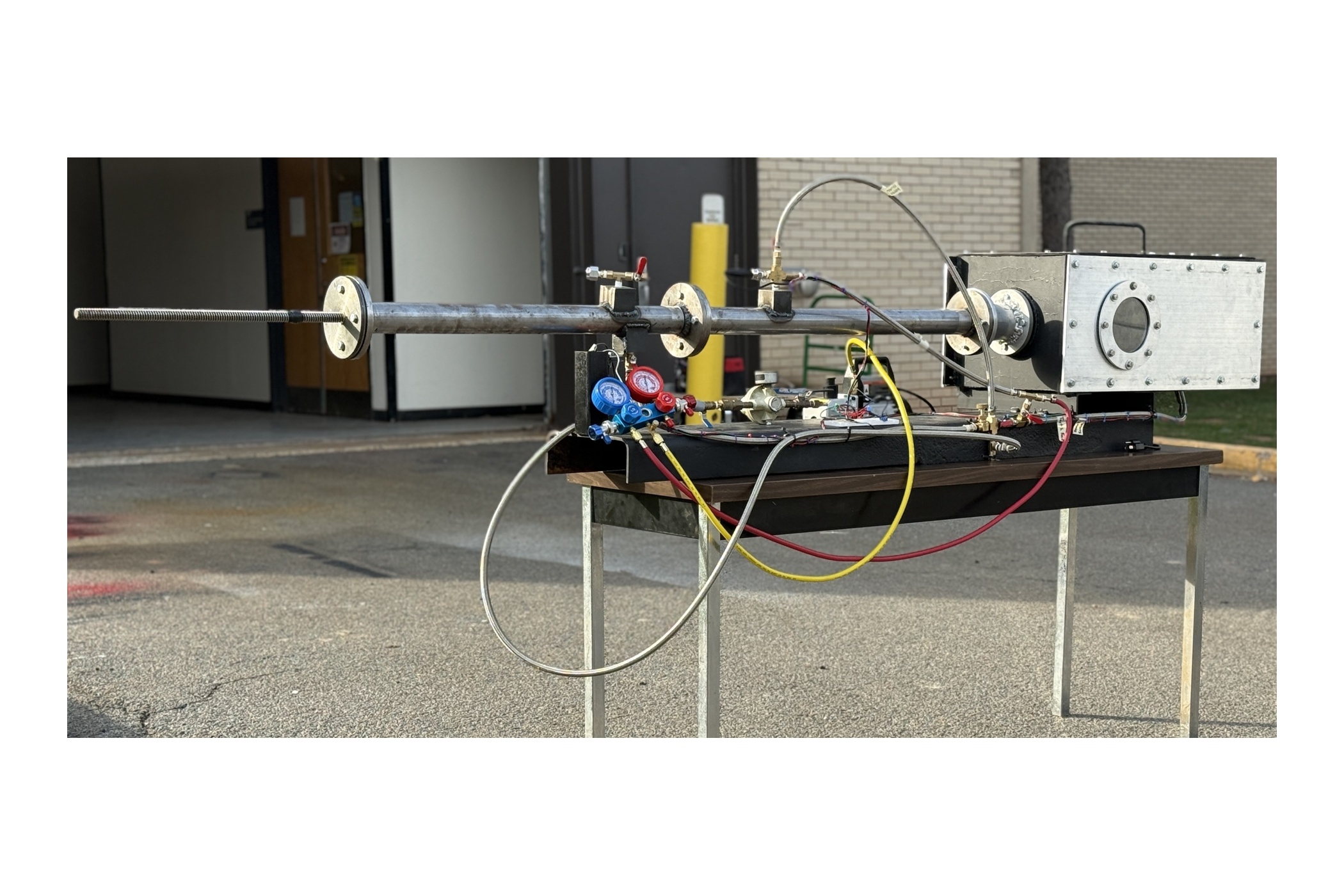
Over the course of the 2025-2026 academic year, our group took on the challenge of Shock Tunnel Enhancement. While there showed promise of results during the previous year's iteration, there was a clear lack of accuracy, consistent results and safety factors; it is good to note that the entire system was also deemed fully functional in its capabilities. Now, its plans are clear: consistent ruptures within its diaphragms, controlled debris propagation, and better containment of a vacuum throughout its test section. Once these challenges have been addressed, results and theories may finally be proven (or disproven). The redesign of the major systems, such as the diaphragm segments or test section, proved to be quite difficult in some aspects. This year's group had to work around previous design choices, including excessive welding, improper sealing, and structural issues with the walls. Although the welds used by last year's team were strong, they limited the ability to make adjustments for optimization. A similar issue with more permanent sealing techniques led to difficulty in finding the source of leaks. The side walls of the test section were previously made from polycarbonate to allow for visual testing, however under vacuum, they experienced severe displacements. Now, with proper sealing all around and aluminum walls with a five-inch porthole, safety has been increased, and a better vacuum is achievable. For better achievement of results, custom scored diaphragms are to be made in hopes that the created bursts are more consistent with cleaner ruptures and propagation. By the end of this year, the goal is to achieve numbers in the hypersonic range of Mach 5+, with the hope of possibly achieving Mach 8 in the end.