
Design, Build, and Flight of a Fixed-Wing RC Aircraft
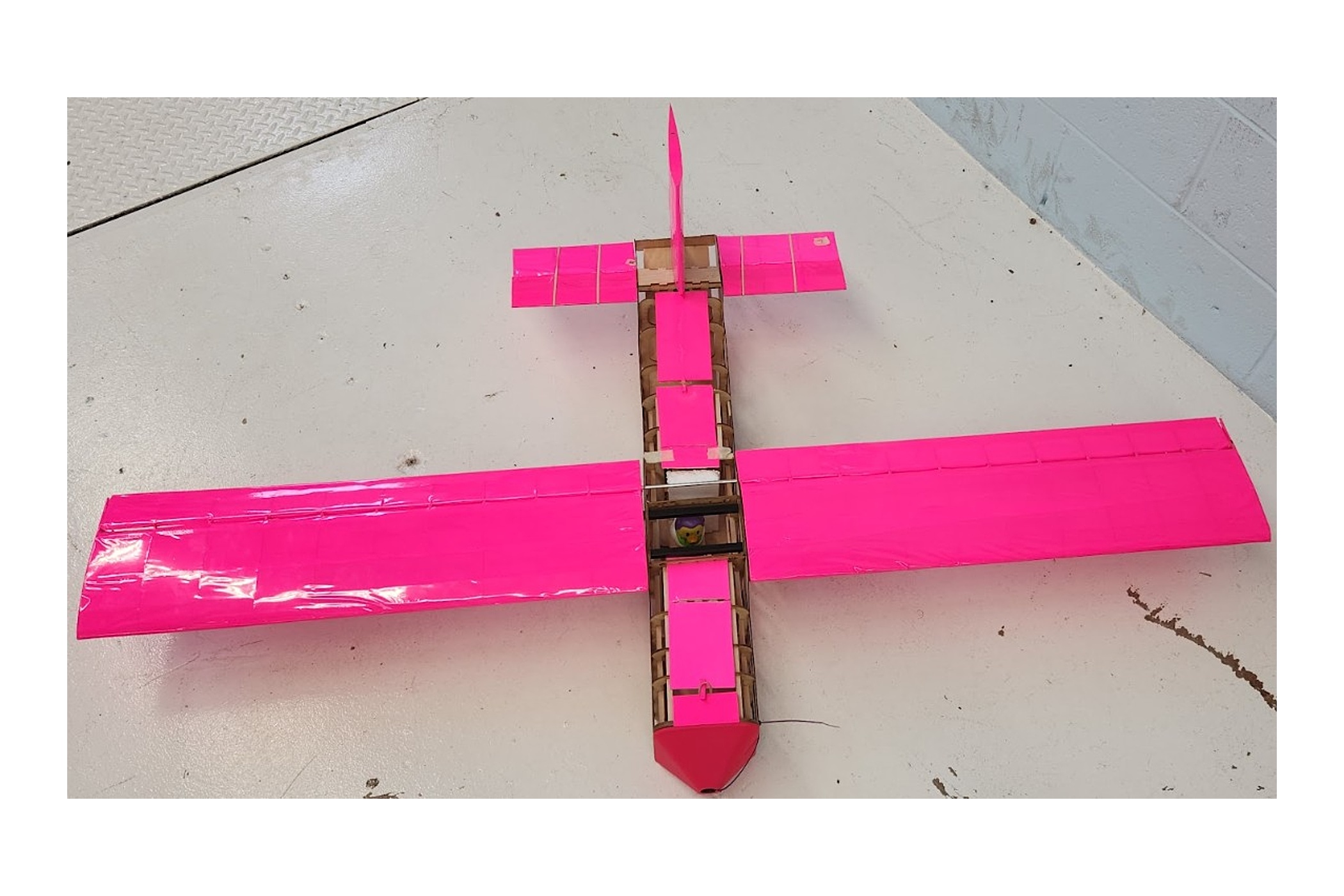
Unmanned aerial vehicles (UAVs) consist of drones and radio-controlled (RC) aircraft. These systems are crucial for conducting delivery/surveillance operations and environmental research. These procedures must be carried out safely and effectively, necessitating new engineering designs that meet complex requirements. A custom RC aircraft is required to safely transport live passengers (three rubber ducks, used to simulate live ones for ethical and safety reasons) and additional cargo (a standard hockey puck), while completing a controlled takeoff, sustaining flight, and performing a safe landing. The aircraft must not only function flawlessly, but it must also provide a comfortable, safe environment for the passengers. The aircraft will not carry live animals during the flight. However, its capabilities must extend so that it is safe for live animal transport in a controlled environment. To complete this, certain public safety and welfare principles are being integrated into the design. For example, thermal and electrical safety are being enforced for the propulsion system to prevent components, such as the motor, from overheating. Additionally, structural components made of weaker materials, such as the wing, will be reinforced to avoid mid-flight failures. During manufacturing, the skeleton material was changed from balsa wood to birch plywood since this provided the aircraft with greater structural reinforcement for the fuselage, wings, and horizontal/vertical stabilizers. Additionally, testing procedures will comply with Rutgers University's drone use policies and FAA regulations, where applicable. The aircraft must transport its payload without compromising on safety or mission performance. Before achieving a successful flight test (at least 5 minutes in duration), the aircraft must first withstand a drop test from a height of 3 feet. For the electronics, the motor must operate without overheating, and when the propeller is attached, it must spin in the counterclockwise direction. In the development of this aircraft, there are design considerations that factor in cultural, environmental, and/or economic impacts. Environmentally, the chosen electric propulsion system is designed to operate with less noise and emissions to align with sustainability goals. Materials are also chosen to reduce overall aircraft mass to decrease the amount of electrical power needed for missions. Economically, the parts-ordering process aimed to minimize costs by using salvaged materials that were still functional. Regarding social factors, this project utilizes creative ways to safely transport non-traditional cargo passengers and cargo, potentially exploring new uses for RC aircraft. Globally, these systems could, in the future, inspire the design of UAV systems that will transport humanitarian payloads to remote locations, track wildlife, or collect data from fragile ecosystems.