
Project Ghost: Design of a Liquid Rocket Engine System
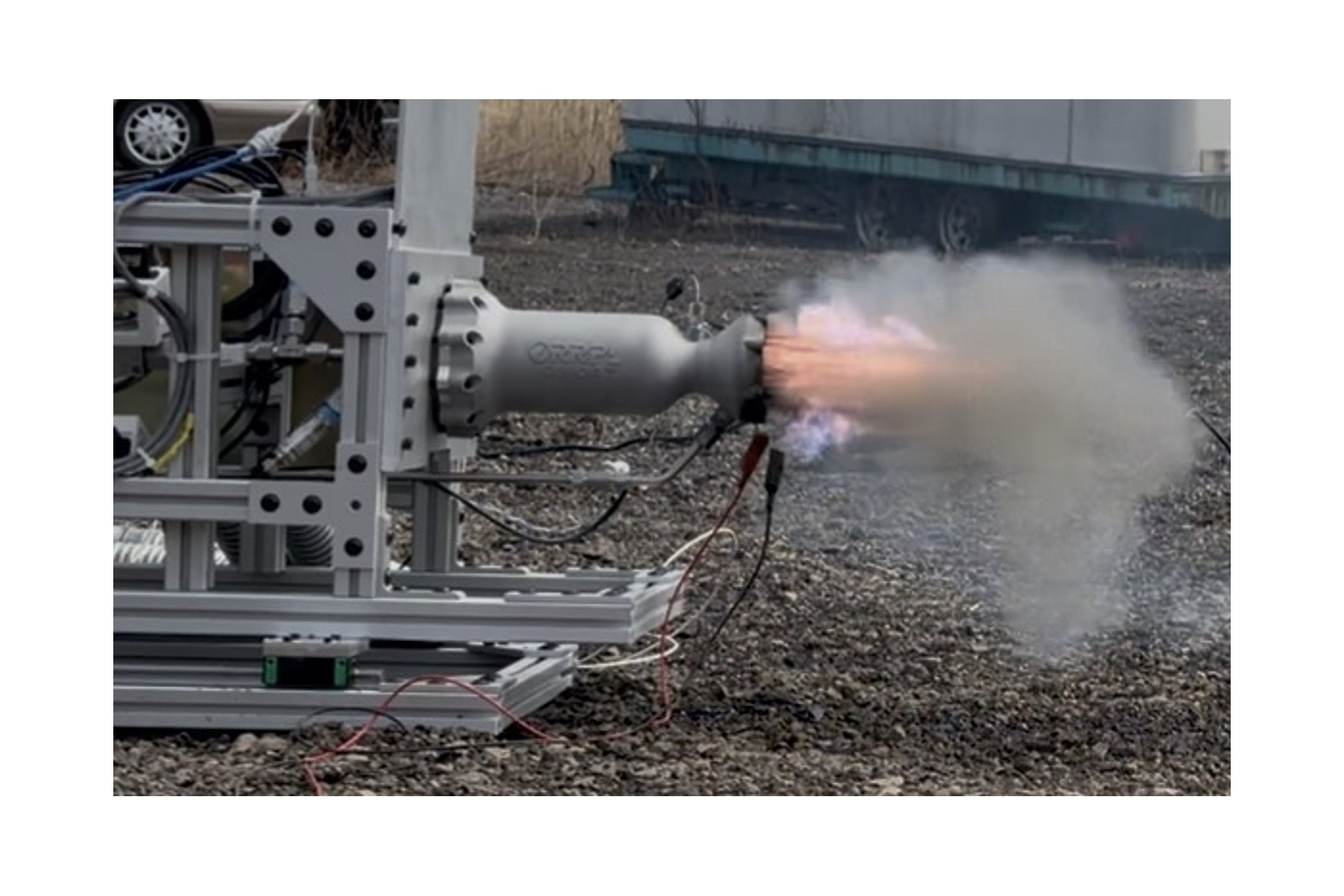
In the rapidly growing commercial space sector, there is increasing demand for engineers with hands-on experience in high-pressure fluid systems, particularly for liquid rocket propulsion. However, at the collegiate level, opportunities to gain practical experience with liquid rocketry remain limited. Project Ghost addresses this gap through the design, construction, and testing of a complete liquid bi-propellant rocket engine system capable of producing 750 lbf of continuous thrust. This work focuses on the development of a professional and robust electrical control and data acquisition system to enable safe, repeatable, and high-fidelity testing of a regeneratively cooled liquid rocket engine. Key system requirements include reliable failure mode detection, accurate measurement of thrust and fluid dynamics, and repeatable operation across multiple hot-fire tests. The control system is powered by a programmable logic controller (PLC) housed in a deployable enclosure for field testing, with long-range data transmission implemented over fiber-optic communication for operator safety and signal integrity. Data acquisition is performed using a LabJack system integrated with a custom-built user interface to enable real-time monitoring and post-test analysis. The Ghost engine is a pressure-fed blowdown design utilizing saturated nitrous oxide as both oxidizer and pressurant, and isopropyl alcohol as fuel and regenerative coolant. Metal additive manufacturing enables integrated regenerative cooling within the engine structure. The vertically integrated system, including the test stand architecture, concentric propellant tanks, and the electrical control suite, supports repeated hot-fire testing and future flight integration. This project closely mirrors industry-standard propulsion systems while advancing Rutgers' capabilities in collegiate liquid rocketry.