
Additive Manufacturing Materials Tester - Group 2
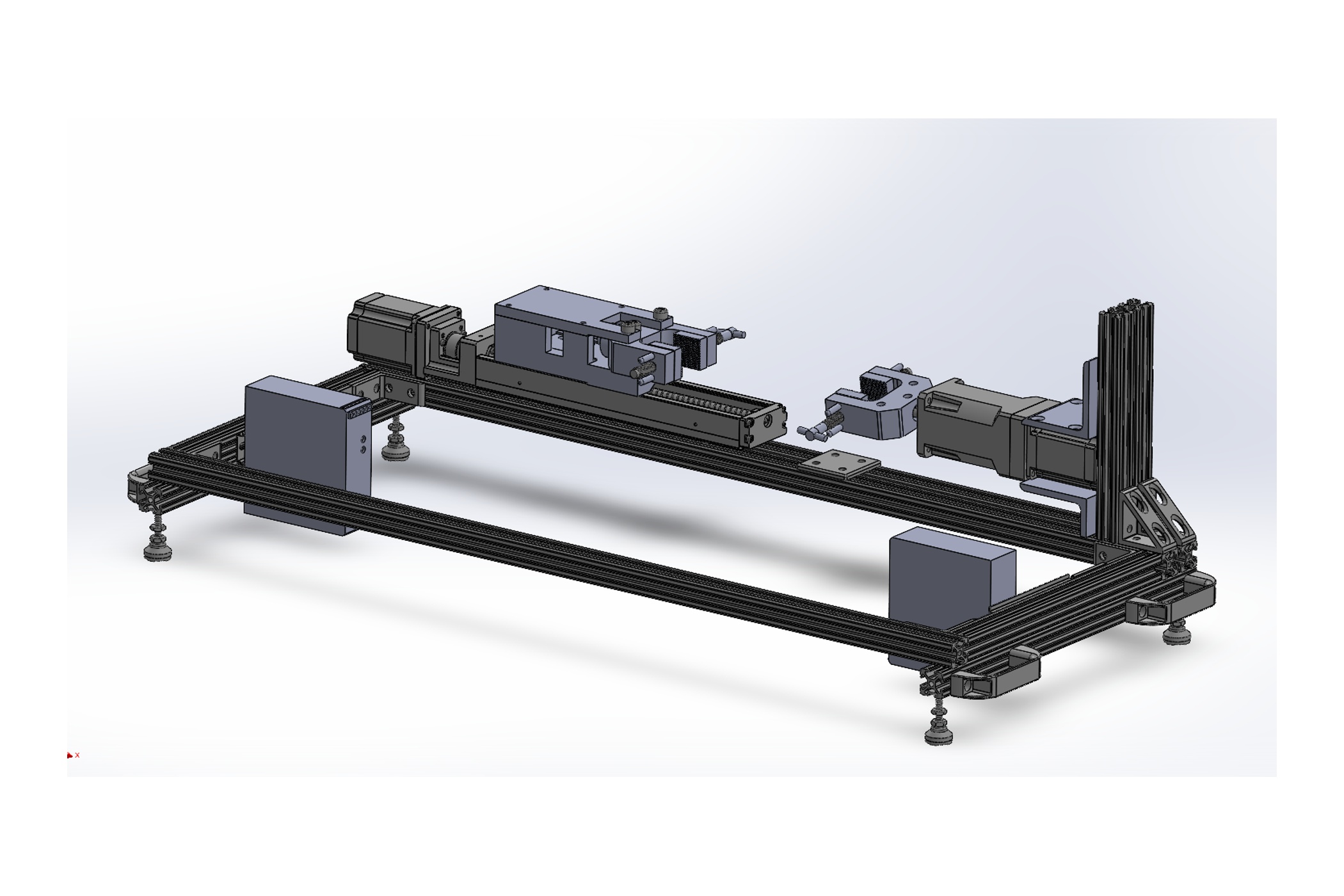
Additive manufacturing, also known as 3D printing, has existed since the late 20th century. However, additive manufacturing has only recently demonstrated the capability to mass-produce highly complex and customized parts. Numerous applications of 3D parts have been observed increasingly across various industries, ranging from aerospace to healthcare. The failure of 3D-printed parts can be devastating in such sectors. For example, 3D-printed parts are used to create prosthetics for patients, and the failure of these parts poses a risk to their health and well-being. As such, additive-manufactured parts must be accompanied by robust and reliable methods of materials testing to keep pace with ongoing innovation. In today's world, most materials testing machines are both expensive and large in size. A commercially available materials testing machine ranges in price from a few thousand dollars to over $20,000. Not only that, but these machines are typically larger than the average person and are often stationed in scientific testing laboratories. With such limiting factors, it was decided to design an additive manufacturing material tester (AMMT) that was both affordable and transportable, yet still reliable enough for use in the current industry. One aspect that all modern materials testing machines share is that they all utilize test samples that are globally recognized, specifically the dog-bone-shaped test specimen. Considering these global and environmental factors, the group altered the design approach accordingly. The goal of this project is to investigate the mechanical properties of components created through additive manufacturing (3D printing). From the outset, our advisor, Professor Andrew Norris, aimed for the project to achieve this objective. Last year, Professor Norris' senior group designed and built a project with a similar goal. Additionally, a secondary aim of that group was to incorporate 3D-printed parts into their machinery. However, the project yielded mixed results, primarily due to the unreliability of the printed parts in obtaining experimental data for measuring real quantities. After familiarizing ourselves with our advisor's goals and the previous senior design group's experience, our team initially researched their project, which involved a variation of the Charpy test, with the intention of developing an improved version. We decided early on to concentrate solely on reliably and accurately measuring the stress and strain of 3D-printed parts, without incorporating these parts into our design.