
Construction and Tuning of a Pellet Fed 3D Printer
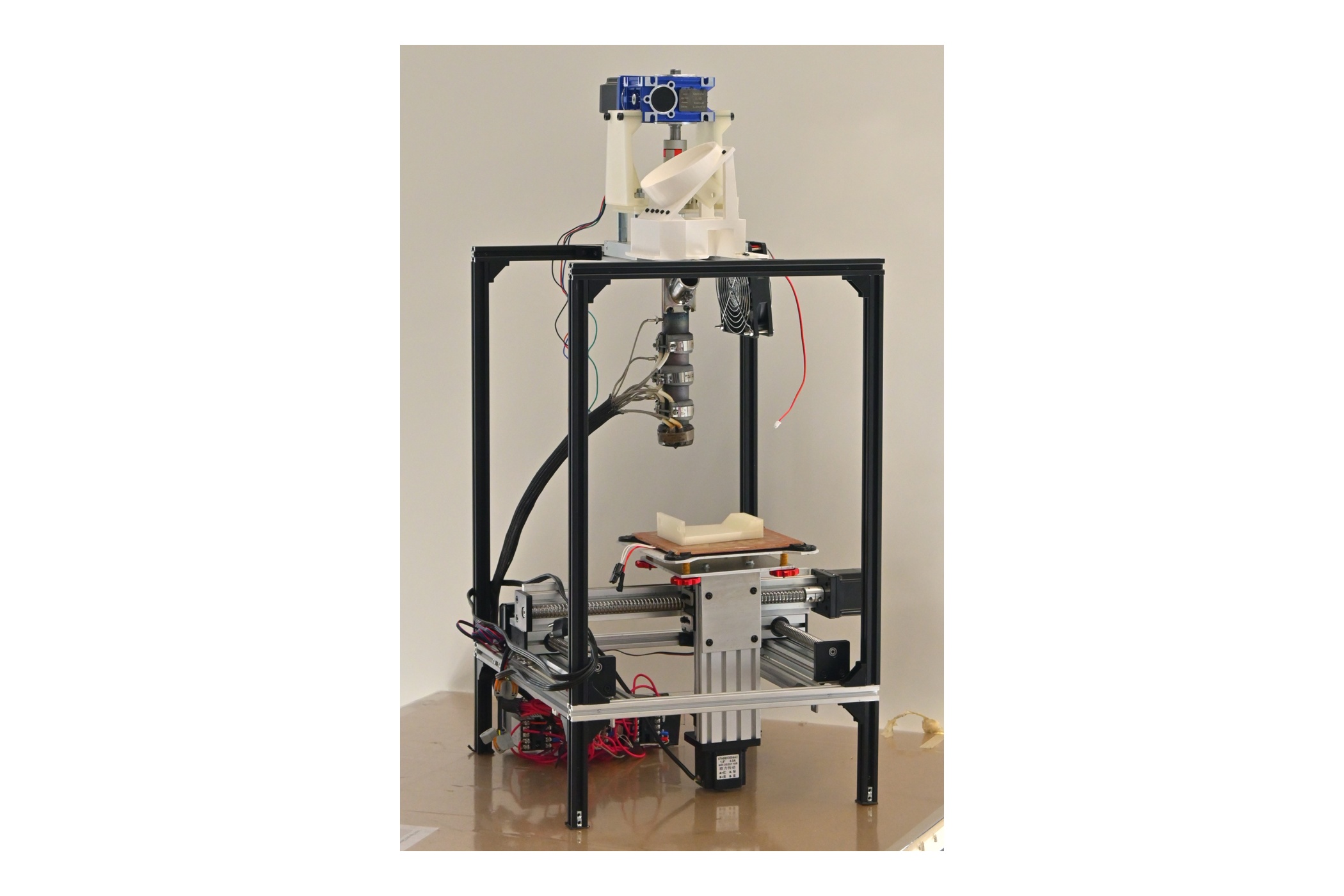
This project focuses on the design, analysis, and development of a pellet-fed 3D printer intended for advanced research applications in additive manufacturing. The printer should be capable of processing both low-temperature polymers (~185 °C) and eventually high-performance materials such as PEEK (~400 °C). Such a system fills a critical gap in Professor Lynch’s research group, where experimental and small-batch polymers cannot be easily printed using traditional filament-based equipment. Unlike traditional filament-based systems, this printer is specifically engineered to process raw polymer pellets, enabling greater flexibility in material selection, reduced cost, and improved sustainability. The broader impact of this work includes improved research accessibility, safer high-temperature operation, and an open, documented platform that future student teams can build upon. Early testing revealed substantial shortcomings in last year’s extruder, including pellet jamming due to a misaligned feed inlet, inconsistent material flow, overheating, and difficult cleaning procedures. Motion system issues, such as drag on the horizontal axis and looseness in the Z-axis, also impaired printing stability. These findings shaped the engineering requirements for the redesign: reliable pellet feeding, fast and simple disassembly for cleaning, controlled thermal management across the barrel, structural robustness under extrusion pressures, and smoother, dependable motion. Manufacturability considerations guided material selection and component sourcing, particularly around 400 °C barrel temperatures. High-temperature-capable steels were selected for all components contacting the barrel, and aluminum parts were excluded from the hot zone. The team evaluated several heater and thermocouple integration concepts before selecting compact, high-temperature heater cartridges with built-in thermocouples. Electronics were upgraded to a BigTreeTech SKR V1.4 controller with TMC-5160T drivers to support the high-current NEMA 23 extruder motor and ensure compatibility with Klipper firmware. Building on these requirements, the redesigned system emphasizes an improved extruder architecture featuring a top-loading feed mechanism to eliminate pellet jamming and enhance material flow consistency. Thermal management is addressed through strategically placed heating elements and cooling zones to ensure proper melting while preventing premature softening of incoming pellets. Structural and motion system improvements further enhance print stability, including reducing axis drag and reinforcing frame rigidity. The printer integrates multiple subsystems, including pellet handling, extrusion, motion control, thermal regulation, and electronics, all coordinated through advanced firmware for precise control. Simulation tools were used to validate structural integrity and thermal behavior, ensuring safe and reliable operation under high-temperature conditions. Additionally, manufacturability and maintainability were key considerations, leading to a design that is both robust and easy to disassemble for cleaning and material changes. Overall, this project represents a significant step toward expanding the capabilities of laboratory-scale additive manufacturing. By overcoming the limitations of filament-based systems, it enables more accessible experimentation with novel and high-performance polymers while providing a scalable, well-documented platform for future development.