
Hybrid Additive Manufacturing
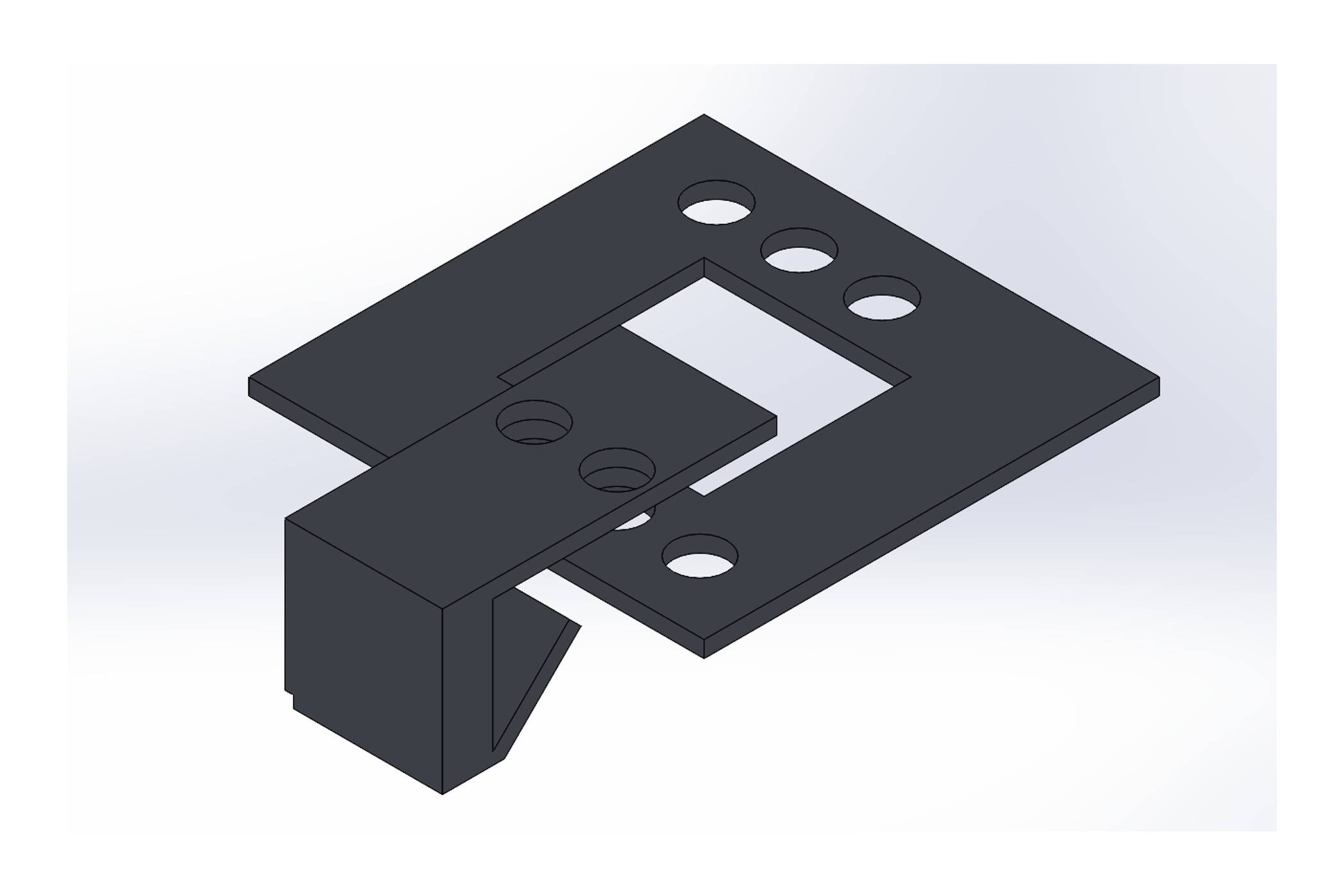
Project Motivation and Problem Statement: Additive manufacturing, or 3D printing, is a rapidly growing engineering tool, but it remains prone to failures. Issues such as layer misalignment, inconsistent material flow, and extrusion errors often occur during a print but go unnoticed until the process fails completely. This results in significant waste of time, material, and energy—a critical economic and environmental concern for research labs, small businesses, and industrial settings. Multi-extruder printers, which use multiple materials, are especially vulnerable. To address this problem, our project aimed to create a system that can detect these defects as they happen, enabling immediate intervention and laying the groundwork for smarter, more reliable printing. Engineering Approach and Methods: Our approach focused on direct, non-intrusive observation of the printer nozzle—the critical point where failures originate. We designed and manufactured a custom, compact mounting system using high-strength polylactic acid (PLA) via additive manufacturing. This mount positions multiple small camera modules around the printer nozzle at 45-degree angles to provide a full 360-degree view of the extrusion process. An aluminum support structure and slotted mounting holes, compliant with American Society of Mechanical Engineers (ASME) fastener standards, allow for fine positional adjustment and stable, repeatable installation. Integrated light-emitting diode (LED) lighting illuminates the nozzle region without generating excessive heat. The cameras connect to a central control board via ribbon cables, enabling synchronized image capture while keeping electronics away from hot components. Design Implementation: The final implemented solution is a complete, real-time monitoring system that attaches directly to the existing printer structure. Key design features include: Multi-Camera Array: A ring of cameras providing overlapping viewpoints that eliminate blind spots around the nozzle. Modular Mount: 3D-printed components that are lightweight, easily replaceable, and designed for simple installation without permanent printer modification. Thermal and Spatial Management: The mount positions cameras safely away from high-heat zones, while the compact form factor does not interfere with normal printer movement or operation. This design successfully meets all project requirements: it provides reliable visual data, protects sensitive electronics, and is easily reproducible or adaptable for other printer models. Results and Performance Evaluation: As of today's submission, testing confirms that the system successfully captures synchronized, real-time video of the extrusion process from multiple viewpoints. The camera mounts remain stable throughout print jobs, and the integrated lighting provides clear, consistent illumination of the nozzle and deposited material. The system does not interfere with printer functionality or print quality. The captured data clearly reveals common defects such as layer misalignment, irregular extrusion bead formation, and material buildup. While automated defect detection is still under development, the system successfully provides the high-quality visual data required for that next step. Impact and Applications: This monitoring system directly improves the reliability and efficiency of additive manufacturing by enabling real-time observation of print failures. Its immediate impact is reducing wasted time and material in research and production environments. The modular design is scalable and can be adapted for use on various multi-material or industrial-scale printers. Most importantly, the system provides a practical platform for future development of automated feedback control—where the printer could pause or correct itself upon detecting a defect. This work advances the broader goal of making 3D printing a more predictable, sustainable, and fully autonomous manufacturing process.