
Upgraded Nutrition Bar Extruder for Automated Cutting and Increased Production Speed
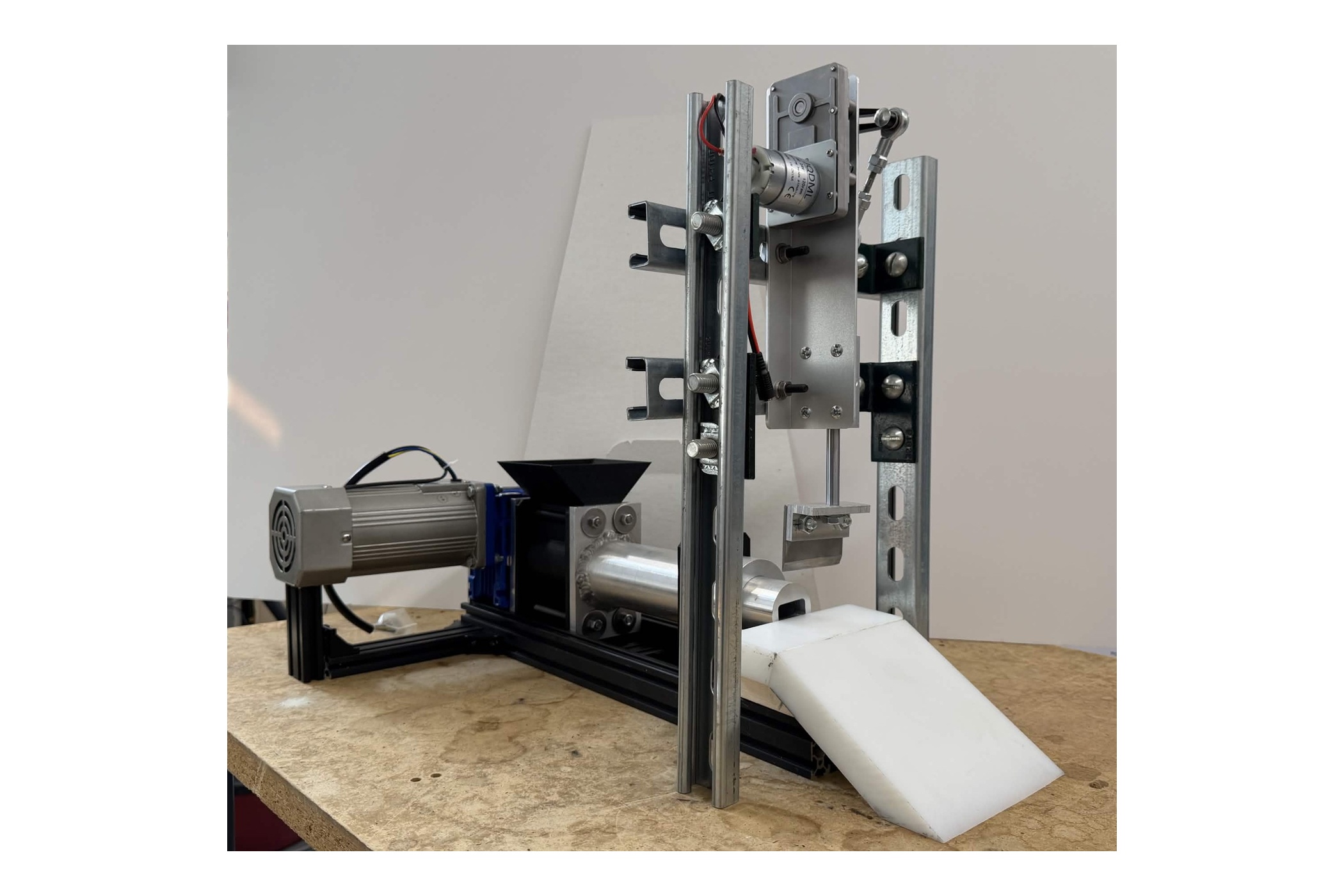
Nutrition bars are healthy, single-portion snacks that can serve as quick on-the-go fixes. These bars are manufactured and sold in bulk, but due to dietary restrictions, such as allergies and intolerances, homemade bars are increasing in popularity due to their flexibility in ingredients. The current market lacks a small-scale, affordable extruder suitable for commercial or residential use in producing nutrition bars. Industrial-grade machines are large and expensive, while home-made methods are lengthy and labor-intensive, requiring individual shaping or pressing into a tray and cutting. Having a compact, low-cost extrusion machine would allow small food businesses and residential users to create their own customized, freshly-cut bars without the need for industrial-sized equipment. The goal of our project is to improve on the first-generation extrusion design from a prior senior design group that produced a slow extrusion rate of about 4 bars per minute. This generation was not a complete product since it was not tested with real food since the materials were not food grade and it was not able to cut the extruded rope into individual bars. Our updated design would address many of these limitations, creating edible bars for a more efficient, food-safe system that will achieve an extrusion rate of at least 10 bars per minute. The technical core of the extruder redesign centers on the screw and barrel assembly. The final screw features a constant 1" minor diameter and a 1.5" pitch, machined from Delrin, a smooth surface and wear resistant material which pushes the material more effectively through the barrel. A guillotine style cutter was implemented to cut the extruded rope into bars. The cutter is powered by a reciprocating cycle linear actuator with a 24 volt DC motor, which is controlled by an Arduino microcontroller to cut quickly without disrupting extrusion. All components that are in contact with the nutrition bar mixture must use FDA food-grade materials. Since the 3D-printed PLA can breed bacteria between the gaps in the ridges, the screw is machined out of Delrin and the barrel and feed throat is lined with Delrin. The cutting surface consists of HDPE, a durable, nonporous material. The ramp is coated with Teflon to allow the bars to slide without sticking. The resulting machine offers a compact, cost-effective solution for small businesses, gyms, and cafes to produce customized nutrition bars with improved speed, safety, and consistency.